
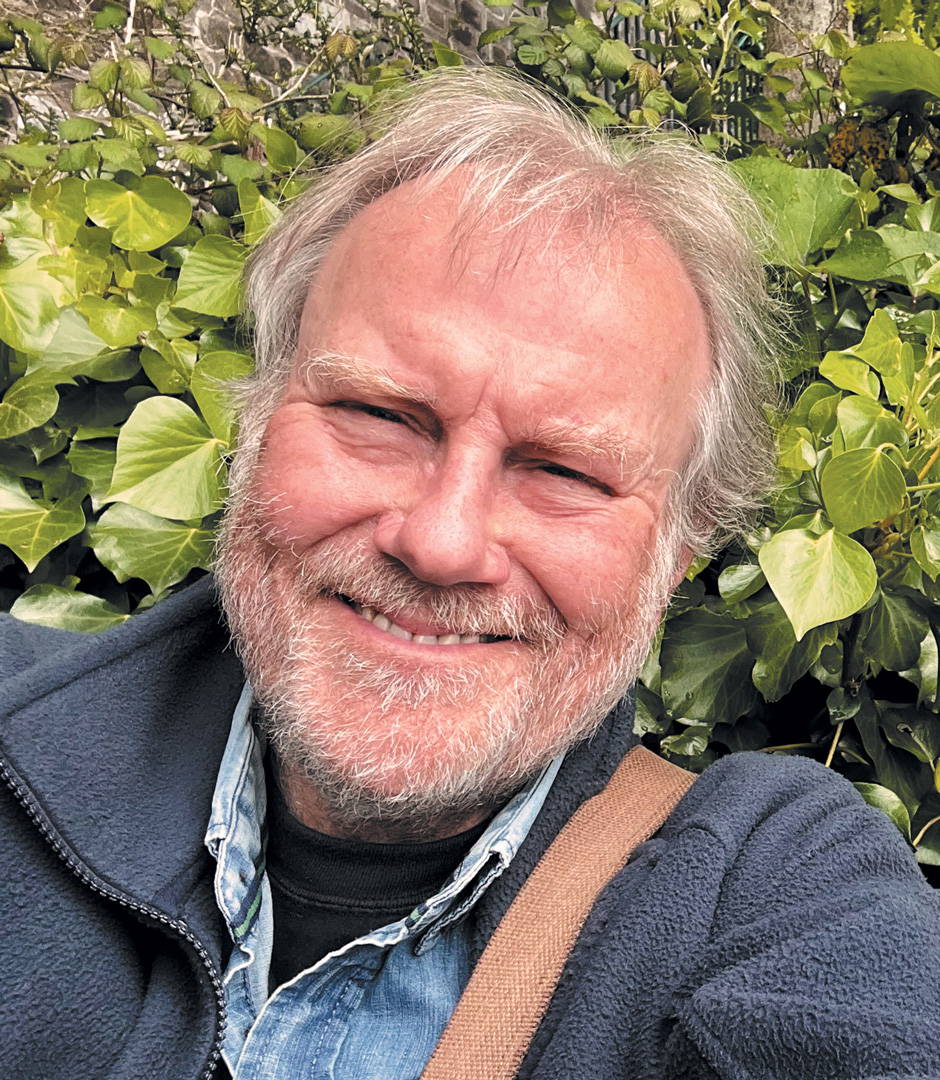
I am now a long-retired English teacher turned biographical novelist. There have been other jobs along the way, but that is how I started out and now, in my later seventies, it is how I think of myself.
I was born and brought up in Derby in one of the many late nineteenth-century backstreets built to house the workforce of the railways, forges and factories that were then rapidly expanding. I can just about recall the years of post-war rationing, cold winters when the snow piled up by roadsides for weeks on end, and the enormously dull Sundays when nothing was open, even less happened, and there was nowhere to go except church.
There were some jewels in all this gloom: one was Saturday tea at my grandparents’ house: just the same terraced house as ours only two miles away. And then there was that great wedding-cake of a building on the Wardwick: the Free Library and Museum bestowed on the town by Thomas Bass the brewer. His statue is outside it: he looks down on us beneficently but with increasing bemusement.
Inside was a haven. The library itself seemed enormous and up towards the glass atrium there was a narrow gallery full of display shelves and a frieze inscribed with the names of scientists, artists and literary giants: they looked down on us too. So a considerable inspiration to me was this gift of a library made by Thomas Bass, and another gifted by Andrew Carnegie which lay at the end of the road I lived on in Pear Tree, Normanton to the south of Derby’s centre.
Later on, in the mid ’60’s I made great use of the Reference Library. This was also a haven; during my sixth-form years some of the teaching on offer from a local boys grammar school was so dire that I bunked off on Monday and Wednesday afternoons to work in there. The Reference Library was housed in the quite hideous extension to the library and art gallery built in 1964 in the à la mode style of the era. This building fell so very far short of the eloquence and craftsmanship of the Bass building that I still weep inwardly when I encounter it. Happily, inside is a different story: welcoming and well-informed staff and thoughtful presentation and curation. Most importantly, there was an art collection, and I wandered this on occasions too numerous to mention: sometimes because I was there and had just acquired an armful of new books on loan, sometimes because I had been parked there by my mother as I was a miserable companion on her shopping trips, and sometimes just because it was raining outside and I had to change buses nearby to get home.
And so it was that Joseph Wright got under my skin. I couldn’t make head nor tail of the incongruity of his pictures. They were all over the place: gloomy tombs in far-off countries, exploding volcanoes, fat factory owners, weird science experiments, dying Romeo, a distraught damsel in distress sitting in a wood. It all made no sense, but it was all sublimely painted ~ even I could tell that.
I left Derby to go to university in 1968 courtesy of Dr Charles Middleton, the Director of Education whose office actually sent me termly cheques for my study grant. My father’s income was assessed to evaluate his contribution, but I never needed to ask him for it: I could manage on what the town, (as it then was), gave me. It didn’t feel like it then, but only 4% of school leavers went on to university in the ’60’s; an extraordinary privilege. These days, English literature is in wholesale retreat. At A level it collapsed from 83,000 candidates in 2013 to 53,000 ten years later. It is still dropping and degree courses are, as a result, closing. It is one thing reading Anglo-Saxon poetry if the state is paying ~ another entirely if you are.
I didn’t come back to Derby for about a decade, other than for family visits. Our young family moved back in the late ’70’s after my father had died in an accident. I have really been based in Derbyshire in one place or another ever since, though we did have a spell in London when the grandchildren were growing up and I had a job there for a few years. Looking over it now, I’ve lived fairly close by, or overlooking the river Derwent for about sixty years, and I sit here now writing this above its valley after it has wound through Cromford and is dropping down below Whatstandwell bridge and on towards Belper.
You can’t live this close to the Derwent without getting bound up with the history that has been generated by it and beside it. The Matlock and Matlock Bath spa towns and their hydrotherapy boom, the momentous spinning works at Cromford and down to Belper and Darley, the scenery carved out by it that Wright spent so many of his later years painting. Renovating one of the Georgian Darley Abbey workers’ cottages in the 1970’s certainly helped in stimulating interest in that period, as did owning a flat for a while in one of the Matlock hydrotherapy palaces, high above the town.
It is only really since 1817 that there was a decent road up from Derby to Belper and on to Cromford and thence to Matlock. The country was just too rough and the Derwent too dangerous in winter, to justify an outlay by a turnpike trust. There were tracks along the river and there were diversions through Wirksworth and ‘over the tops’ to Matlock via Starkholmes and so on, but the valley itself above Whatstandwell remained remote and untouched. The Cromford Canal slid into it quietly in 1794 and expired just as quietly in 1944. The railway arrived in 1849, which is when the hydrotherapy boom really got underway; this was sadly truncated at Matlock by Barbara Castle in 1968 thus cutting off the route up to Buxton and Manchester.
In this slowly changing riverscape, all manner of invention, innovation and herculean engineering works occurred. Rather like my early encounters with Joseph Wright, it is all a little incongruous: how come all these original and hugely successful enterprises took hold here, in this fairly isolated and dramatic scenery? And what caused all this upsurgence in just a century or so: say from 1760 to 1860? It is another puzzle.
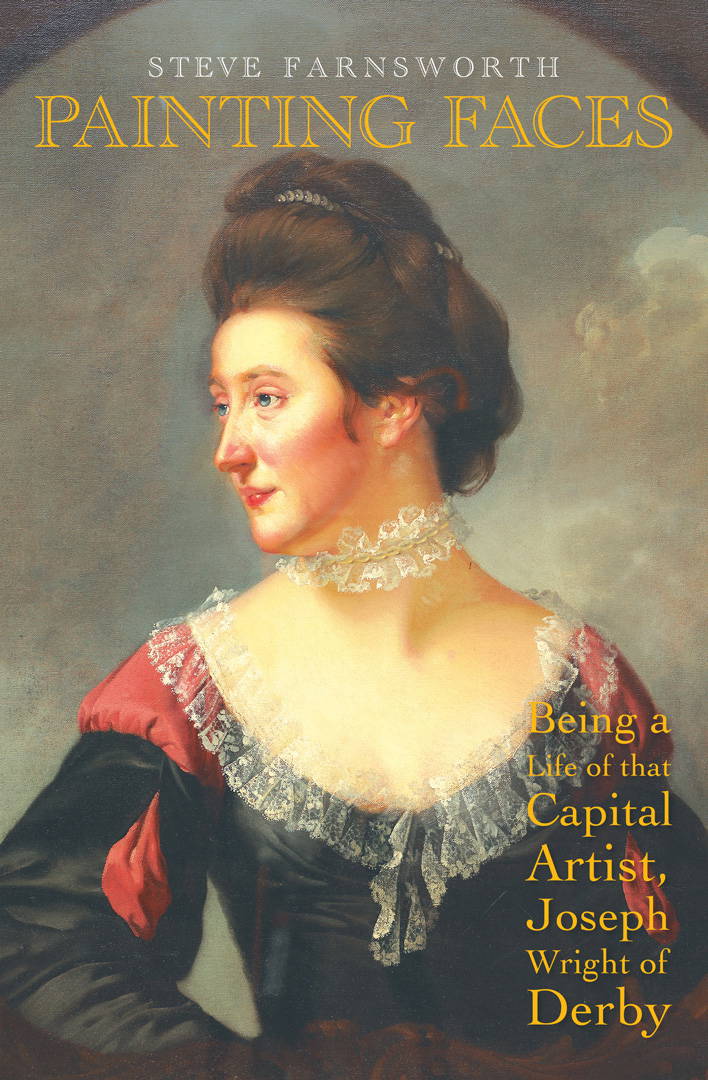
All these little questions about why here? why then? and, who were these people? settled like sediment in my mind over several years. As I walked the Cromford Canal or came across some other Joseph Wrights in a Chicago or Los Angeles gallery, or came across a converted hydro in some part of Matlock, or another defunct cotton spinning mill in a lonely Derbyshire valley, the questions rose again. And so, The Derwent Trilogy arose. The first part, Painting Faces, deals with the life of Joseph Wright of Derby, his stellar network of friends and acquaintance and, by-the-by it explores the hey-day of Derby as a small Georgian town whose leading citizens formed a very significant part of not only the Midlands Enlightenment, but that of Britain as a whole. This part was published in late 2025.
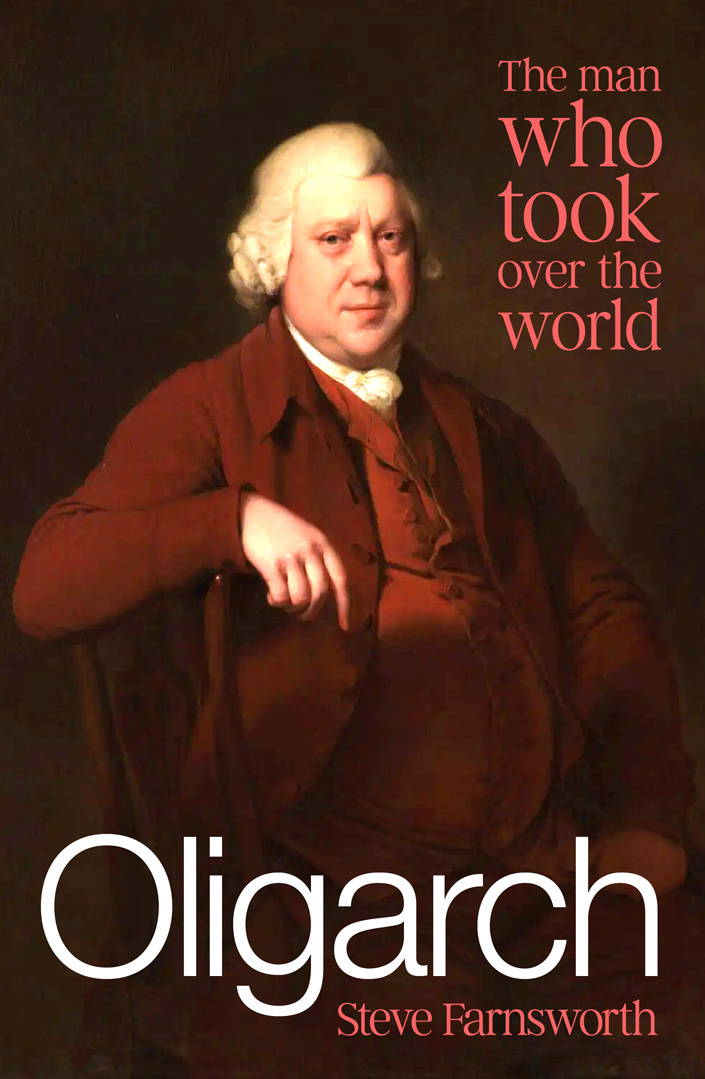
The second part explores the life and times of Richard Arkwright and, because he is such a large part of Arkwright’s success, Jedediah Strutt. Like Wright, who I think is over-simplistically, and wrongly, thought of as a prophet of the scientific revolution, Arkwright is over-simplified as a founding factory-master and ‘father’ of the industrial revolution. He did indeed initiate factory method and thinking and all that went with it, but his grasp of markets and market-position as well as his lust for control of them are even more telling. He was the type of entrepreneur Adam Smith warned us against in The Wealth of Nations (1776), which was the seminal economic treatise of Arkwright’s era. This novel is only part written and might be published in 2026. It is likely to be called Oligarch, which has distinct resonances with current issues concerning control, over-reach and monopoly.
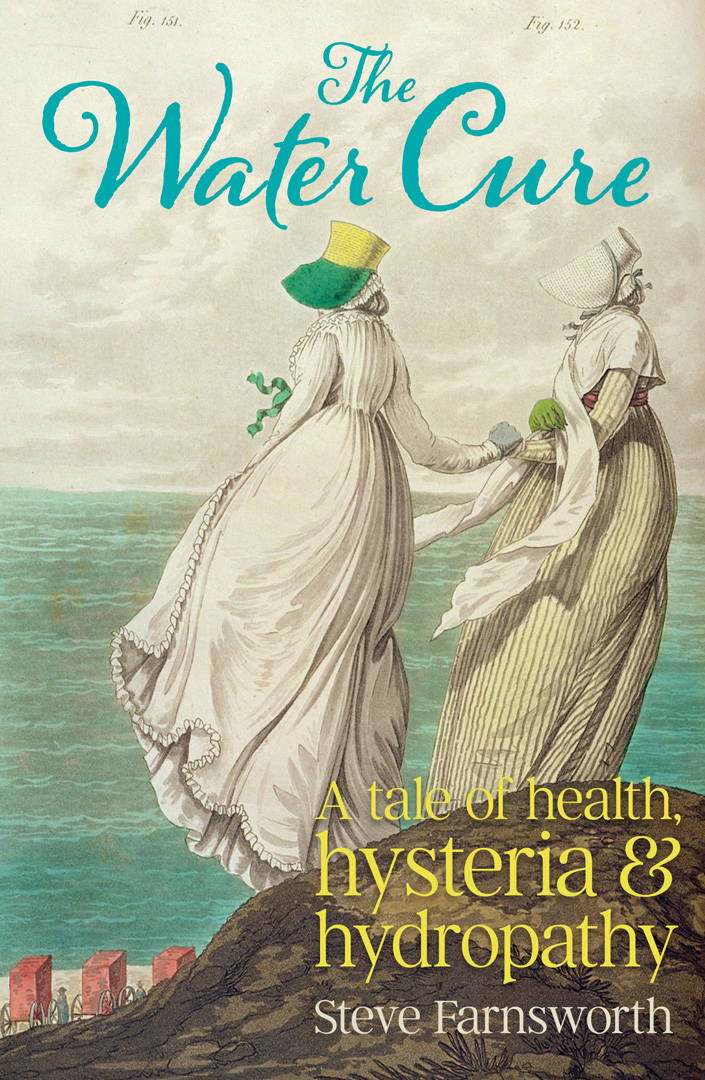
The final part, still on the drawing board, concerns the hugely influential rise of ‘the water cure’ and hydropathy. A leading practitioner and entrepreneur of hydropathy was John Smedley of Wirksworth, Lea and Matlock. The story is a strange blend of the religious, the pseudo-scientific and the quackery of many medical efforts before the arrival of advanced methods of diagnosis, of pharmacology and treatment. Again, its epicentre was here, at Matlock and, together with the network of other hydropathy centres, (such as Malvern), and the string of spa towns, (Cheltenham, Leamington, Tunbridge, Buxton and so on), it provided a kind of progenitor of the NHS itself. Hydropathy began to fade as the NHS was created and as these private concerns closed post-war, in many cases they were taken over by the state as some of the only treatment facilities then available. Probably entitled, The Water Cure, it should be written and published by 2027, though 2028 might be a wiser guess. That will be enough.
In all cases, my approach will be to write through the format of a biographical novel. This is not much in vogue these days. It tends to be seen as neither one thing ~ a ‘proper’ biography, or another ~ a thoroughgoing novel where everything is imaginary. Neither really suits my purpose. Joseph Wright’s biographical sources are too scant to build an academic biography: no diaries, no journals, almost nothing about his personal life, about sixty letters. Novelistically this is perfect; it makes him an almost blank sheet. For example, almost nothing is known about his wife Ann, yet they had several children and almost a twenty year marriage before her early death. What was her influence on his life and work? And what was his relationship with Erasmus Darwin really like? Darwin knew hom intimately over many years. None of the academic monographs can go anywhere near such matters. A novel can. In doing so it can illuminate where previously there has been no light at all. Of course, if may not interpret matters exactly as they were and that must be true where there is no evidence to guide us. This can also happen even when there is evidence if it doesn’t fit the writer’s bias, or if it gets misinterpreted. But there is a literary truth as well a literal one. The reader decides whether it convinces.
Similarly with Arkwright and Strutt. We know very little about Arkwright’s early life: almost nothing at all. Even his son was kept in the dark about it. Yet he spent twenty years cutting hair, shaving chins, pulling teeth and making wigs before he came anywhere near cotton spinning. How on earth does a near-illiterate youth become the wealthiest commoner in Europe by his late fifties after a start like that? It is an astonishing personal story, again not helped by an almost absolute lack of evidence about those missing years, the poor dead first wife, the second who abandoned him, the shadowy mistress whom he also then abandoned…the estranged son, the cast-off illegitimate son: there is so much more to Arkwright than the stock shorthand of, ‘father of the factory-system.’ Jedediah, on the other hand, couldn’t stop writing letters and raised a brood of gifted and humane inheritors of his businesses who wrote back to him equally often…there is lots of evidence about him. But very little about how he got on with the mercurial Arkwright himself and whom he was bankrolling in the early days: who was controlling whom? I’m currently working that out.
It is too early to say how I will treat John Smedley, the people who influenced him and those he influenced: he needs a year or two to marinate.
So there you have my background and the background to The Derwent Trilogy. They intermingle, as you see. The subjects of the three books intermingle as well: characters from one pop-up in another, a few events are seen from a different angle by someone else in another book. Together they combine, I hope, to provide a panorama of a time and a place which was unique, unparalleled and perhaps even more special to those who know these towns and villages and the valley that connects them. Above all, I hope they provide enjoyment and some appreciation of the remarkable place we all share.
Steve Farnsworth
October 2025